
Gulf Coast Community Gears up to Fight Crude Oil Export Terminal
The Harbor Island terminal is part of a plan to accommodate the world’s largest oil tankers and double the amount of crude exported from the port to about 600,000 barrels a day from about 300,000.

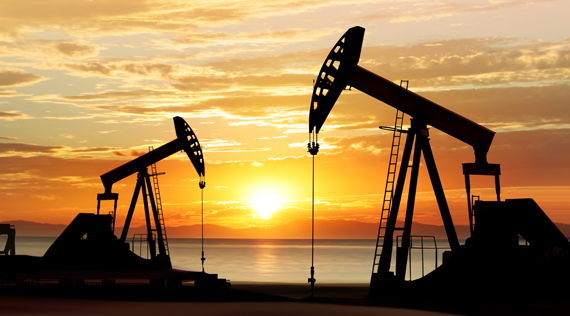
OILMONSTER.COM- Cathy Fulton can’t forget how quickly Hurricane Harvey came barreling into this barrier island, leaving residents little time to do anything but board up what they could, grab a few things and flee. Her home of nine years was destroyed by winds of up to 130 mph and tide surges that pounded beaches and flooded the island in more than six feet of water.
She shudders to think how this beach community would have suffered if storage tanks holding million barrels of oil were also in a storm’s path.
“I just can’t imagine how much worse things would have been,” she said. “There was no time, there was not time really for anybody to secure much of anything.”
Fulton, 54, is among the members of a group recently formed to oppose a plan by the Port of Corpus Christi to build a $500 million crude oil export terminal on Harbor Island, bringing the world’s largest oil tankers and a tank farm just 1,000 feet across Aransas Pass from this city of about 4,000. With gutted hotels along the beach along the Gulf of Mexico and collapsed buildings in town as reminders of their vulnerability, residents here say they can’t take the risk of something going wrong at an operation through which millions of barrels of crude oil would pass each day.
The opposition group, the Port Aransas Conservancy, is gearing up for a fight that has implications not only for Port Aransas and the Port of Corpus Christi, but also the energy industry and economy. With the flood of crude produced in the Permian Basin and other shale plays, Texas is emerging as one of the world’s biggest oil exporters and the Port of Corpus Christi as the hub for those exports, which bring billions of dollars into the state.
The Harbor Island terminal is part of a plan to accommodate the world’s largest oil tankers and double the amount of crude exported from the port to about 600,000 barrels a day from about 300,000. The project would dredge the ship channel and build a dock to handle ships called Very Large Crude Carriers, or VLCCs, which stretch 1,200 feet — longer than the Navy’s Nimitz-class aircraft carriers — and carry up to 2 million barrels of oil.
The development, proposed for 254 acres the port owns on Harbor Island, would include a terminal that could load up to 285,000 barrels of crude a day and a tank farm holding up to 5 million barrels. Eventually, the complex could expand to accommodate two VLCCs, store up to 20 million barrels and load up to 1.2 million barrels a day.
Courtesy: www.houstonchronicle.com
Track the prices behind the story
Daily prices for 281 crude grades, Brent–Dubai spreads, history back to 2009 and Excel downloads.